
The worst leak isn't the one that wakes you up at 3 AM. It's the one that drips silently inside a wall for six months, until a stain appears on the living-room ceiling — and you discover you need to redo the drywall, the flooring, and sometimes a ceiling on the floor below.
An average hidden leak caught late costs between $5,000 and $15,000 in Montreal. Caught early, the repair often lands below $800. Here are the 9 signs a certified plumber checks first, and the tools we use when the naked eye isn't enough.
1. Brownish or yellowish stain that's growing (even slowly)
The classic. On a ceiling, wall, or door frame. The trick: measure the stain with a ruler, take a timestamped photo, then recheck 48 hours later. If it grew by a centimeter, the leak is active. If it stays stable, it may be an old repaired leak — but residual moisture can still cause problems.
2. Water bill climbing with no explanation
Compare your current-month consumption with the same month last year. Montreal bills by meter consumption in several boroughs. A 20-30% jump with no change in habits (no new dishwasher, no baby, no watering) almost always signals a continuous leak — silently running toilet, pipe punctured inside a wall, or faulty water heater connection.
3. Persistent damp smell in a room
The "basement" smell that doesn't clear with ventilation often signals moisture trapped inside a partition. The human nose detects humidity well before the eye. If a room smells damp for more than two weeks with no obvious cause (no recent flood, no wet laundry), take it seriously.
4. Sound of running water when all taps are closed
Shut off every tap, toilet, dishwasher, washing machine. Listen. A continuous hiss or regular drip signals a pressurized leak (punctured supply line) or a leaking toilet. Press your ear to the floor, to walls — sound travels further than you'd think.
5. Floor buckling, baseboards pulling away
Hardwood bowing, laminate lifting at the seams, baseboard separating from the wall: all signs of chronic moisture from below. On a basement floor, it's often a drainage issue or sewer infiltration. On an upper floor, it's a pipe leaking inside the subfloor.
6. Visible mold, even a small patch
Black dots in a ceiling corner, greenish stains in a window frame, orange-red behind a toilet: all mold species that need constant moisture to grow. Find the moisture, find the leak. Mold doesn't bloom by accident.
7. Water meter spinning with no usage
Simple test tonight: shut off all water points in the home. Go read the water meter (often in the mechanical room, sometimes in an outdoor vault). Note the position. Wait 30 minutes with no water use. Re-read. If the number moved, you have an active leak somewhere.
8. Water pressure dropping at one specific tap
A single tap that lost pressure often signals a blockage or leak upstream in that branch. If it's every tap, the problem is general (main valve, pump, municipal supply). If it's just one, it's localized — so precisely diagnosable.
9. Rust marks on visible fittings
Look under sinks, around the water heater, at the low points of copper piping. Green trace (copper oxidation) or brownish (iron rust) indicates slow weeping that's been going on for months, sometimes years. Fittings that weep without bursting are time bombs.
The tools a plumber uses when eyes aren't enough
When signs point to a closed wall or floor, here's what comes out of the van:
- Moisture meter: pin probe that reads humidity in wood, drywall, concrete. Tool cost: $200 to $500. First tool out of the bag because it quickly eliminates false alarms.
- Thermal camera: detects surface temperature differences. A wall with hot-water leaking behind will run warmer; one with cold-water will be cooler than its surroundings. $800 to $3,000 for a quality unit.
- Acoustic detection: amplified headset that listens for pressurized-water sound escaping a pipe, even through concrete. Useful to pinpoint before opening a wall.
- Dye test: fluorescent dye added to a specific toilet or drain to see where it re-emerges. Simple, effective, cheap.
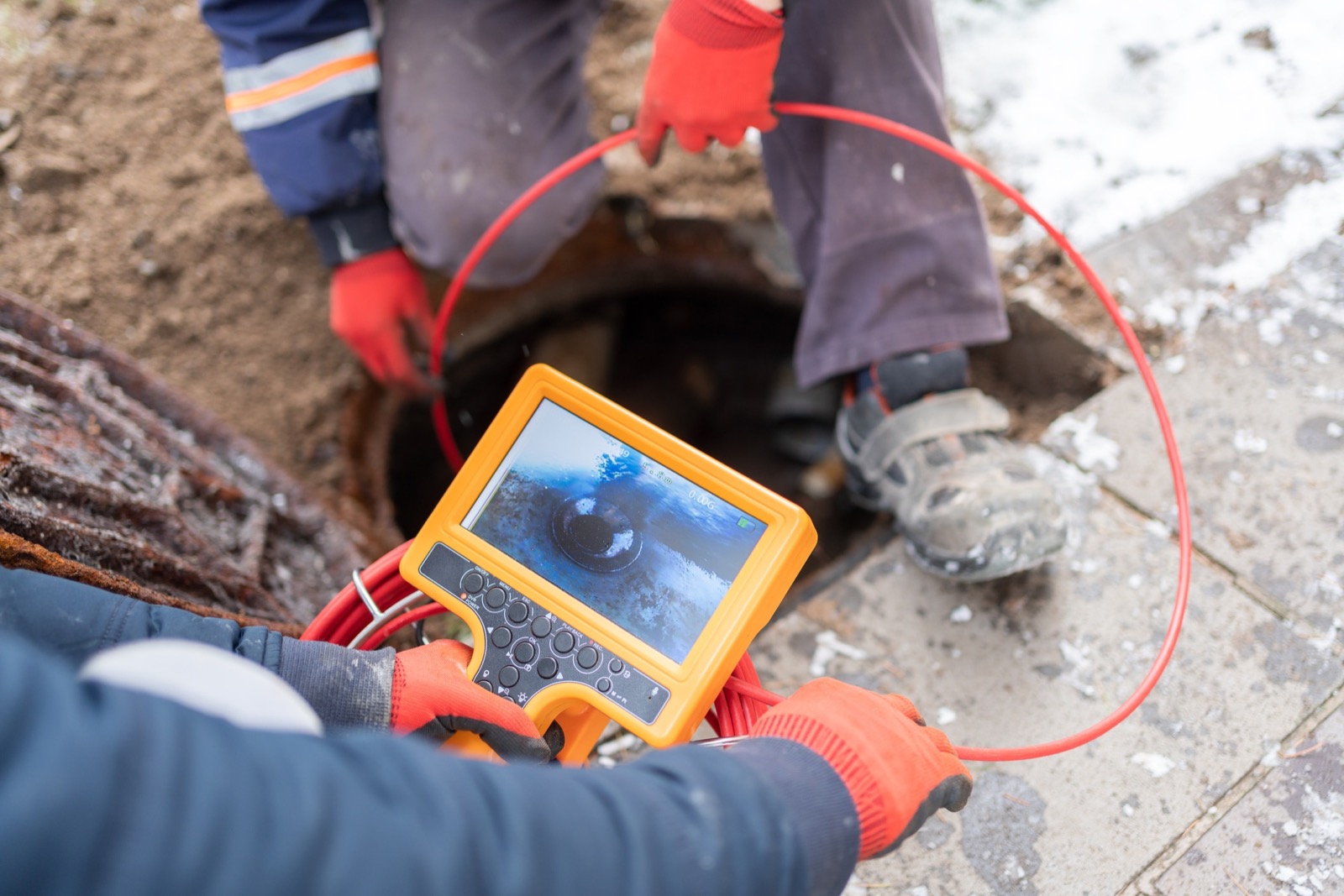
- Sewer camera inspection: for leaks that might originate from the drain. See our guide on how to read a camera inspection report.
- Gas-pressure test: we pressurize the system with nitrogen and locate the leak with a gas detector. The ultimate weapon when nothing else works.
When to call — and when to wait
Call (514) 655-6560 immediately if:
- Active visible flow (even small)
- Stain that grows in under 48 hours
- Continuous water sound with everything shut off
- Sudden pressure drop across the whole home
Schedule within the week for:
- Stable but unexplained stain
- Abnormally high water bill
- Damp smell that persists
- Meter creeping with no consumption
2026 Montreal pricing for leak detection
- Standard diagnosis (moisture meter + visual): $180 to $280
- Advanced diagnosis (thermal + acoustic): $350 to $550
- Camera drain inspection as complement: $350 to $700
- Gas-pressure test: $450 to $800
- Simple repair (fitting, joint, short section): $250 to $600
- Repair with wall opening + closure: $800 to $2,200
Summary — checklist for tonight
- Check every toilet (dye in tank, wait 10 minutes)
- Inspect under every sink (rust, greening, damp)
- Read the water meter, wait 30 min with no use, re-read
- Smell each room (abnormal damp odor?)
- Look at baseboards and floors (buckling, pulling away)
- Touch low walls (cold-damp to the touch?)
Plomberie PSF runs a hidden-leak detection service in Montreal with full professional gear — moisture meter, thermal camera, acoustic detection, camera inspection. Over ten years finding leaks inside Plateau triplexes, Mile End condos, and Pointe-aux-Trembles houses. Guaranteed diagnosis or money back. (514) 655-6560 or request your assessment here. For after-hours emergencies, see our night emergency guide.